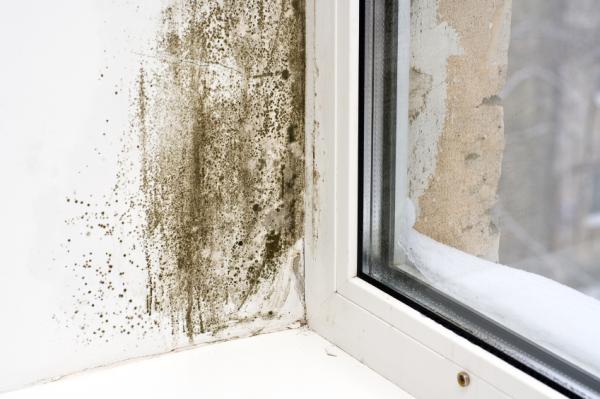
High levels of relative humidity can be harmful to many people and to furniture and homes. If your home is very humid, it is necessary to find ways to reduce the moisture. You need to maintain a pleasant environment and know how to avoid moisture at home. If you live in an area with wet weather and do not already know how to do this, in oneHOWTO we explain some tricks to remove humidity.
Tricks to remove humidity: dehumidifiers
Although it may seem obvious, not everyone knows of the existence of dehumidifiers that can help remove humidity from our home. The truth is that there are many types of dehumidification systems from which we can choose the one that best suits our home and budget, from appliances that collect water and only need filters changing to one-use plastic dehumidifiers. Still, all are based on the principle of condensations, decreasing the relative humidity of the atmosphere. Take a look at the difference between all three types:
- Dessicant: This type of dehumidifier uses natural substances that will absorb the humidity of your home. It is usually small in size and can be re-used. This type of dehumidifier works best for houses in cold climates and average levels of humidity. Moreover, it doesn't produce water.
- Refrigerant: This type of dehumidifier turns humidity into condensed water. This is great if you have high humidity levels and for houses in warm climates, though you should know that the water produced by the device will need getting rid of every day.
- Peltier: Peltier dehumidifiers are specifically built for humidity in just one area such as closets or other small rooms.
Additionally, there are now smart dehumidifiers that can adjust their settings based on the current humidity level, providing a more efficient solution. You can find them at DIY centers and department stores; there is also the possibility of making small scale dehumidifiers ourselves at home. oneHOWTO has some ideas on how to make your own dehumidifier.

Clothesline
If you want to remove moisture from your home, you can implement a simple but effective trick by hanging the laundry in open spaces or outside. If, after washing, you leave the clothes hanging in your home, this will cause a big increase in moisture. In addition to leaving your house very humid, moisture may prevent clothes from drying quickly, leaving them and your home smelly.
Similarly, you can also make use of a tumble dryer to prevent wet clothes from increasing the relative humidity in your home. Still, you should note that not all items can be dried with this appliance. For delicate items, consider using a drying rack in a well-ventilated area.

Humidity in cabinets
If your goal is to eliminate humidity from cupboards and pantries, a very effective approach is to place in these spaces containers you no longer want filled with sea, bath or rock salts. You best put them in a corner or shelf where they are not at risk of tipping or falling.
By doing so, the salt will absorb the moisture inside the cabinet. It will be necessary to replace the salt after about 2 or 3 months, as this loses its properties and reaches a point where it becomes saturated. To enhance the effect, you can add activated charcoal, which also absorbs moisture and odors. Learn how to make a salt dehumidifier in this article.

Humidity in the bathroom
The toilet is a place where humidity builds up and lingers for a while, spreading to the rest of the house. Always shower with the bathroom door closed and, after showering or taking a bath, leave your window open or a fan on to help get rid of the humidity fast and avoid your towels smelling musky.
This can also be applied to get rid of humidity around the whole house. Ventilating as much as possible will prevent the condensation of humidity. Additionally, consider installing a humidity sensor fan that activates automatically when moisture levels rise.

Increase the temperature
Increasing the temperature of your home with a heater will help lower humidity levels. As the temperature increases, the humidity decreases. However, ensure that your heating system is efficient and does not add to the moisture problem. Radiant floor heating can be a good option as it evenly distributes warmth and reduces moisture buildup.

Keep things dry
Make sure to keep everything as dry as possible. Drip pans should be kept dry, make sure air conditioning systems are not dripping. Plants are another source of humidity, so if you have plants, consider placing them outside.
When cooking, cover your food as much as possible to avoid steam rising to the air. Also, always turn the vent on while cooking. If your kitchen lacks proper ventilation, consider installing a range hood with an external vent to efficiently expel moisture and odors.
Humidity condensation on windows
More often than not, humidity buildup due to condensation can be seen on windows. This is dangerous as an accumulation of humidity can eventually cause mold.
To prevent this from happening, we recommend you don't use any air-moving device, but use this simple trick:
- Get hold of a natural fiber sponge and soak it in a mixture of sea salt and water.
- Wait until the sponge has absorbed water and leave to dry.
- Once the sponge is completely dry, leave the sponge near the window. This should get rid of the moisture.
For a more permanent solution, consider installing double-glazed windows to reduce condensation.
Plants and humidity
We all know plants are great to purify the air indoors, but if your home is prone to humidity and condensation, this may not be such a good idea. While you are tackling the problem, we recommend you place your plants somewhere outdoors like a garden, greenhouse, or balcony, you will notice the difference in humidity levels. On the other hand, if you want to keep indoor plants, opt for species that require less water, such as succulents.

If you want to read similar articles to Tricks to Remove Humidity from your Home, we recommend you visit our Maintenance and home security category.
- If you have excess humidity in your home there may be a serious construction deficiency in your house, such as having no thermal insulation. If the problem is highly frequent and you want to get rid of it once and for all, the best solution is to get a construction specialist to solve the problem, though it may be costly. Additionally, proper insulation not only helps in reducing humidity but also improves energy efficiency.
- Moisture can also come from the kitchen, this is why we recommend always using the exhaust fan when cooking. To further reduce humidity, consider using lids on pots and pans to minimize steam and moisture escape.
- Does your house have carpets? These are a great sponge for moisture, so you may want to consider changing your flooring to marble or wood. Alternatively, regular steam cleaning can help reduce moisture and prevent mold growth in carpets.
- Consider waterproofing your basement if you have one, this can be a great source of humidity, especially if built in concrete. Proper drainage systems can also help prevent water from seeping into the basement walls.
- Make sure your outdoor gutters are always clean, as debris and dirt buildup in cold weather can also turn into excess condensation. Regular maintenance of gutters can prevent water overflow and the associated humidity issues.