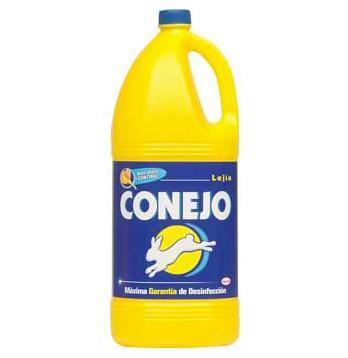
Bleach is a liquid chemically made to disinfect the bathroom, floor and other surfaces. It can also be used to wash clothes. These are things most people know; however, many ignore the fact that bleach is also present in our bodies. Next, in OneHowTo.com, we explain a great deal about bleach: its chemical composition, the different names it takes, the characteristics of bleach, and what precautions to take when it comes into contact with eyes or sensitive areas.
Chemical composition of bleach
Sodium hypochlorite or sodium hypochlorite are the chemical compounds known as bleach. They have the formula NaClO. Bleach contains chlorine in a state of oxidation +I, making it a strong and economical oxidant. In aqueous solutions, it is only stable with a basic pH level. When mixed with an acid, the chloride releases elemental chlorine. That is why bleach should be stored away from any acid. Sodium hypochlorite (together with sodium chloride (salt)) is easily obtained by dissolving chlorine in a solution of aqueous soda in a disproportionation reaction: 2 NaOH + Cl2 -> NaClO + NaCl + H2O.
Interestingly, bleach's effectiveness is also due to its ability to break down tough stains and eliminate odors. This makes it invaluable in both household cleaning and industrial applications where hygiene is paramount. The science behind bleach's action is rooted in its oxidative properties, which allow it to disrupt the molecular structures of bacteria and viruses, rendering them inactive.
Ways to name bleach
Bleach can also be known as liquid bleach. It is sometimes referred to as "chlorine bleach" to distinguish it from non-chlorine bleaches, which use different chemicals for bleaching purposes. This distinction is important for understanding the varied applications and safety measures associated with each type.
In industrial contexts, bleach is often identified by its chemical name, sodium hypochlorite, particularly when discussing its use in large-scale disinfection and sanitation processes. This chemical terminology is crucial for professionals who handle bleach in commercial or industrial settings.
Properties of bleach
The properties of bleach are well-known to everyone. It is a common product used for cleaning and whitening. Because of its properties, it destroys many colorants, hence its use as a whitener. In addition, it is also used for its disinfectant properties.
Beyond its whitening and disinfecting capabilities, bleach also exhibits antifungal properties, making it effective against mold and mildew. This is particularly useful in damp environments where fungal growth is a concern. Furthermore, bleach's ability to neutralize odors is another reason for its widespread use in both domestic and commercial cleaning.
Despite its powerful cleaning abilities, it is important to handle bleach with caution due to its corrosive nature, which can cause damage to surfaces and fabrics if not used correctly.
Origin of bleach
Bleach is a chemical compound called sodium hypochlorite, dissolved in water. It was developed by a Frenchman named Berthollet in 1787 to whiten fabrics. Then, in the late 19th century, Louis Pasteur proved its incomparable power of disinfection, expanding its use to protect health by protecting against germs and bacteria.
Since then, bleach has evolved to become a staple in hygiene practices worldwide. Its adoption in hospitals and public health campaigns has played a significant role in reducing the spread of infectious diseases. The history of bleach is a testament to its importance in maintaining cleanliness and public health standards across various sectors.
Properties of bleach
Bleach is a corrosive product that should be treated with care as it is harmful to health and therefore must be stored out of reach of children and should always be handled carefully using gloves.
Its corrosive action can damage stainless steel if used in high concentrations for a prolonged time. It also damages clothes if frequently used as a whitener, over time turning white to a grey color. Bleach is not suitable for washing nylon, silk, or wool because it destroys them. For this reason, you should use commercial products which have appropriate concentrations for each use and which are not so dangerous to manipulate.
If you want to whiten a piece of cotton clothing to achieve a special effect, you can apply bleach, but as soon as you have achieved the desired effect, you have to neutralize the chemical reaction of the bleach on the fabric. You can do this by submerging the item in a mix of water and vinegar (200ml of vinegar in 1 liter of water) and then washing with water and neutral soap (3 to 5 gr of pure soap flakes in 1 liter of water).
However, despite the power of bleach, its corrosive action disappears as it acts and ends up decomposing into salt and water. Bleach poured down the drain will continue its cleaning action until it loses all its corrosive and antiseptic power. For this reason, it does not affect the environment.
Nevertheless, it is critical to avoid mixing bleach with other household cleaners, especially those containing ammonia or acids, as dangerous gases can be released, posing health risks. Understanding these interactions can prevent accidents and ensure safe usage.
How to act in a bleach intoxication
In general, to counteract the action of bleach, use only cold water. In cases of accidental ingestion vomit should not be induced; use large quantities of cold water, milk, ice creams, or antacids to neutralize it and call a doctor to get medical assistance. If the bleach comes into contact with skin or eyes it must be cleaned or washed with abundant water for at least 15 minutes. Some combinations of bleach with whitening agents or certain household cleaning products in powder form and ammonia can release chlorine, which can cause asphyxiation.
It is crucial to keep emergency contact numbers handy, and if possible, have access to a guide on first aid measures for chemical exposures. Quick and informed actions can greatly mitigate the adverse effects of bleach exposure.
If you want to read similar articles to What is Bleach and how is it made, we recommend you visit our Home cleaning category.