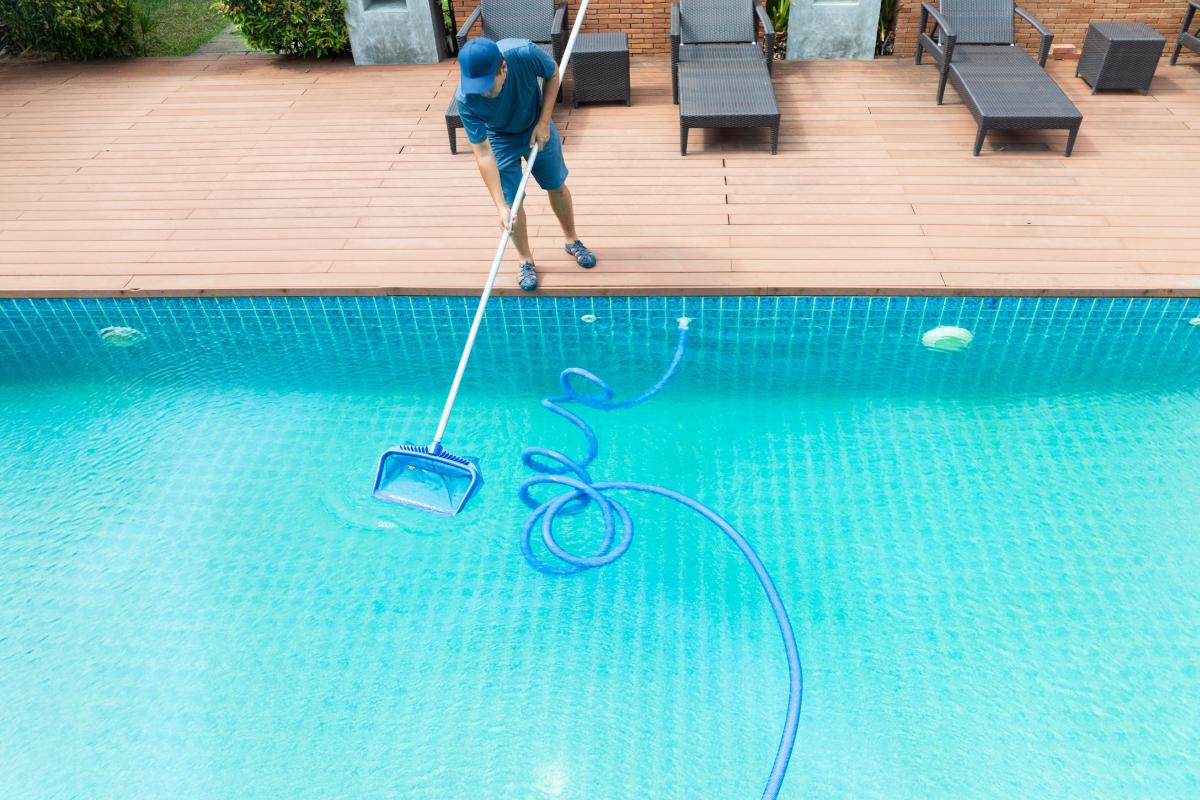
Pool maintenance checklist: A simple weekly routine to keep the water clear all year round

Why a weekly routine is better than a one-off 'big clean'.
Clear water doesn't just come from one heroic clean-up. It’s the result of small, repeatable actions that maintain the balance of four systems: Circulation, filtration, chemistry and physical cleanliness. When one of these systems malfunctions, the others have to work harder. A bit of debris creates an increased demand for chlorine. A filter that’s overdue for cleaning reduces circulation, meaning that sanitiser takes longer to work. And when the chemistry is off, you can spend days trying to achieve clarity.
A simple weekly routine can prevent the domino effect. It also protects your equipment. Pumps, filters, heaters and salt cells have a longer lifespan when the water is balanced and the flow is steady. Most importantly, this approach is predictable: you won't be left guessing, panicking or trying random solutions to a problem.
If your pool is stubborn—recurring cloudiness, frequent algae, unstable pH—then a periodic check-in with professional pool maintenance can be the fastest way to identify the real bottleneck (circulation, filtration size, stabiliser creep, or hidden organic load).
What you’ll need: keep it simple!
You don't need a garage full of chemicals. A small kit will help you work quickly and accurately.
- A reliable test method is essential. A drop kit is best, but quality strips are acceptable for quick checks.
- Access to leaf net and skimmer basket.
- Pool brush for walls and steps.
- A vacuum head or hose, or a robotic cleaner.
- Clean bucket and measuring cup.
- Your regular sanitiser can be liquid chlorine, cal-hypo, tablets or a salt system.
- pH control products: acid/pH minus and pH plus, if your water tends to be acidic.
- Gloves and eye protection.
Tip: Store chemicals in a cool, dry and well-ventilated area. Never mix products in the same container.
The weekly pool maintenance checklist (in order):
1) Quick visual scan (two minutes).
Before testing or dosing anything, look out for clues.
- Is the water sparkling or dull?
- Is there any visible haze, green tint or 'milky' look?
- Is debris collecting in the corners or on the steps?
- Are weak return jets a sign of restriction or a dirty filter?
- Is it an oil line at the waterline, a sunscreen film or foaming?
This quick check will help you determine whether today's session is for general maintenance or to fix and recover.
2) Empty the baskets and check the flow (3 minutes).
Good flow is the foundation. Do these exercises every week:
- Empty the skimmer basket.
- Empty the pump basket (turn the pump off first).
- Check that the water level is at mid-skimmer.
- As you walk past the equipment, listen out for any unusual noises, as these could indicate air in the system, worn bearings or a partially closed valve.
If the return jets feel weak, make a note of it. Even perfect chemistry can appear 'slow' if the flow is weak.
3) Test the water (5 minutes).
- Testing is the 'steering wheel' of pool care. At a minimum, you should test:
- Free chlorine (FC) – your active sanitiser.
- pH : increased comfort and chlorine efficiency.
- Total alkalinity (TA) – pH stability
- Cyanuric acid (CYA/stabiliser) – protects chlorine from sunlight.
- Calcium hardness (CH) protects surfaces and equipment, which is more important for plaster.
- Salt level (if salt pool):
How to think about results (simple logic):
- If the FC level is low, the sanitation will be weak and the water will eventually become cloudy.
- If the pH level is high, the efficiency of chlorine decreases and the risk of scaling increases.
- If the CYA level is too high, the chlorine becomes 'sluggish' and it becomes more difficult to prevent algae growth.
- If the TA is too high, the pH fluctuations will drive you crazy.
Make a note of the results on your phone. Remember that consistency is more important than perfection.
4) Adjust the chlorine level first (sanitation comes before appearance).
Chlorine (or your chosen sanitiser) prevents the growth of algae and breaks down organic matter. Weekly goals:
- Maintain the FC level within an appropriate range for your pool type.
- Avoid letting it drop to zero and then trying to catch up.
A practical approach to dosing:
- If your pool looks great but the FC level is slightly low, top it up.
- If your pool water is hazy or has a strong chlorine smell, don't assume that you need to use less chlorine. Often, you need more effective chlorine and better oxidation, as well as brushing and filtration.
If you’re unsure whether your pool is using up chlorine faster than usual, carry out an FC check from evening to morning. A significant loss overnight often indicates the presence of organics/algae.
5) Adjust the pH level for comfort and performance.
The pH level affects comfort, the performance of the equipment and how effectively the chlorine works.
- If the pH level rises, you will often see dull water, an increased risk of scaling and reduced chlorine effectiveness.
- If the pH level drops too low, surfaces and metal components can corrode and swimmers may experience irritation.
Add pH chemicals slowly with the pump running and retest once the pool has been circulated. It is better to make small corrections than dramatic swings.
6) Brush the walls, steps and any problem areas (10 minutes).
Brushing is underrated because it looks 'old-fashioned', but it's one of the most effective preventive measures you can take on a weekly basis.
Focus on:
- steps, benches and corners
- waterline tile area
- Behind the ladders and handrails.
- Any shaded areas where algae thrive due to low circulation.
Brushing helps to loosen the biofilm and ensure that the sanitiser can properly contact the surfaces.
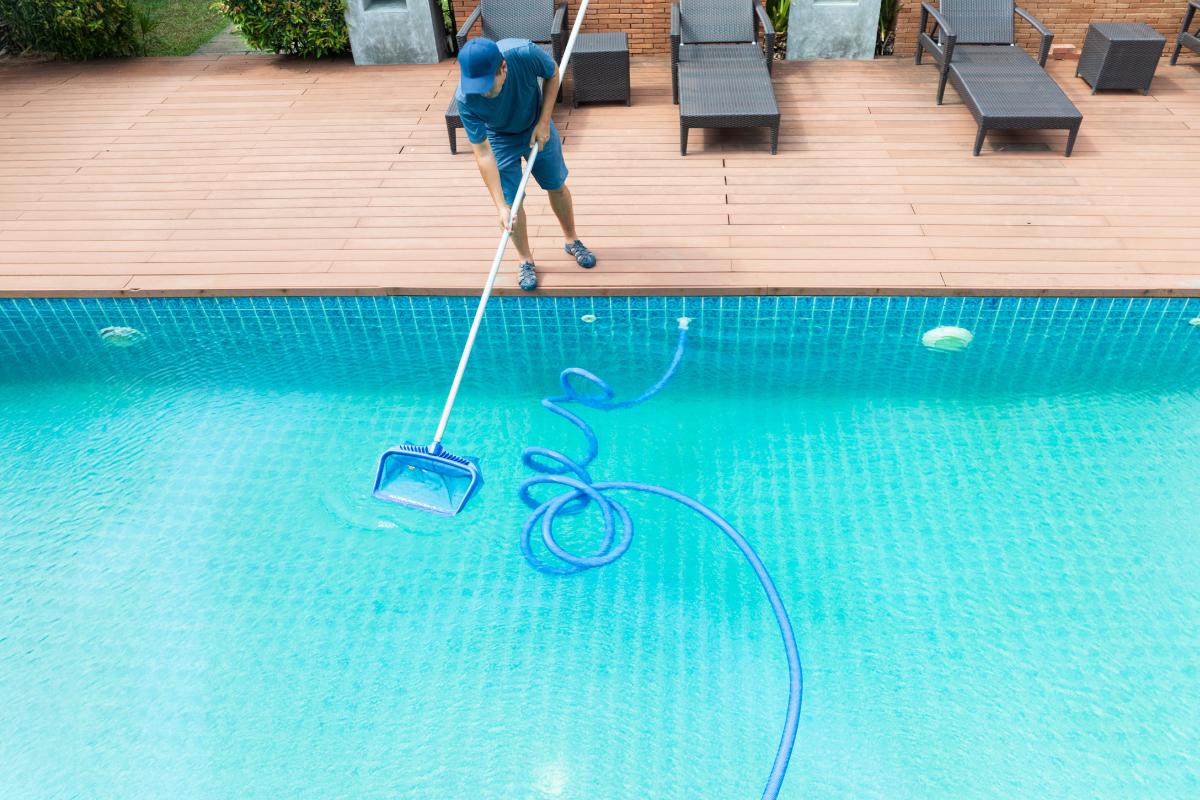
7) Skim and vacuum, or run the robot.
Debris doesn't just look unsightly; it also consumes chlorine and encourages the growth of algae.
Select one approach each week.
- Manual vacuum + skimmer A36.
- Run the robotic cleaner for long enough to cover the entire pool.
If you are vacuuming to waste (where applicable), remember that you are removing water, so top up and recheck the chemistry.
8) Check filter pressure and clean “when needed”
Filters aren’t supposed to run “forever.” They collect what you remove from the water. Watch your pressure gauge:
- Learn your clean baseline pressure (write it down).
- When pressure rises noticeably above baseline, it’s time to clean/backwash (method depends on filter type).
Filter-type reminders:
- Cartridge: rinse thoroughly; occasional deep clean for oils/minerals
- Sand: backwash as needed; consider periodic sand maintenance depending on age and performance
- DE: backwash/recharge (or open and clean) per manufacturer guidance
A clean filter restores circulation and speeds up clearing after heavy load (storms, parties, heat).
9) Final 60-second equipment check.
Before you walk away, consider the following:
- Confirm that the pump is properly primed (there should be no large air bubbles).
- Check for drips or leaks.
- Confirm that the timers and automation are set up correctly.
- If you have a heater, make sure that the flow is adequate and that there are no error codes.
- For a salt pool, check the chlorinator panel for the following: output percentage, salt warnings and cell status.
This small habit helps to identify problems early on.
The 'extra' monthly checks that prevent expensive surprises.
A weekly routine keeps the water clear, while monthly checks ensure the system is protected in the long term.
Clean the waterline and check the surfaces.
If you notice a ring, address the issue promptly. Built-up oils are harder to remove and can reduce the frequency of filter changes.
Verify that the stabiliser (CYA) level does not increase.
CYA levels can rise gradually, particularly when using tablets. High CYA levels are a common reason why pools become difficult to keep clean. If you’re constantly struggling to maintain an effective level of chlorine, test the CYA level and devise a plan.
Inspect the O-ring on the pump lid and the unions.
A dry, cracked O-ring can suck in air, reducing efficiency. Even a tiny suction leak can cause significant clarity issues.
Review the pump's running time by season and usage.
More heat, more swimmers and more debris means a greater need for filtration. Cooler, low-use weeks often require less.
Seasonal adjustments (simple, not complicated).
Weeks of hot weather/high UV
- Test the chlorine level more frequently, as the sun and the number of swimmers will affect the demand.
- Brush more frequently if you have ever had an algae problem.
- Ensure that the filtration run time matches the load.
Stormy weeks/heavy debris
- Skim more often and empty the baskets more frequently.
- Expect a spike in chlorine demand due to organics.
- Clean the filter more frequently.
Cooler months (when the pool is still open).
- Although chlorine demand often drops, don't let free chlorine (FC) fall to 'almost zero'.
- Monitor the pH level, as some pools can behave differently when the water cools.
- Keep brushing and skimming, as leaves and rainwater can still overwhelm the system.
Troubleshooting Quick Guide
“My pool is clear, but it always uses up a lot of chlorine.”
Common causes:
- Hidden organics, such as early algae and debris stuck in corners.
- Dirty filter or poor circulation.
- Exposure to high levels of sunlight without appropriate stabiliser management.
- High bather load (sunscreen and oils).
Actions:
- Thoroughly brush the pool, clean the filter and check for night-time chlorine loss.
'Cloudy water after a busy weekend.'
Common causes:
- Increased organics and insufficient filtration time.
- pH drifting high
- The filter is nearing its dirty threshold.
Actions:
- Test and adjust the pH level, top up the chlorine level, run the filtration system for longer and clean the filter if the pressure is high.
'Green tint is showing up in the shady corners.'
Common causes:
- dead zones in circulation
- inconsistent brushing
- The sanitiser level is too low.
Actions:
- Brush those zones to improve mixing and keep the chlorine level consistent.
When a DIY checklist just isn't enough!
A routine like this can solve most day-to-day pool problems. However, if you repeatedly notice any of the following, it is often faster and cheaper to consult an expert:
- You constantly adjust your chemicals, but you never feel 'stable'.
- The cloudiness returns within days of cleaning.
- The filter pressure is rising too quickly, or the flow feels weak, even after cleaning.
- You suspect that the CYA level is high and are unsure how to reduce it safely.
- You have recurring algae growth despite having 'normal' chlorine levels.
In such instances, a professional can pinpoint the underlying issue, whether it be related to hydraulics, filter sizing, stabiliser levels, salt cell performance or suction leaks, and establish a stable baseline. That’s where professional pool maintenance pays off, as you stop buying fixes and start running a controlled routine.
A simple weekly schedule that you can actually stick to!
For the easiest plan, use this structure:
Weekly (30–60 minutes):
- visual scan
- baskets + flow
- Test and adjust the chlorine and pH levels.
- brush
- vacuum/robot
- Check the filter pressure.
Monthly (15–30 minutes):
- Perform a deeper filter clean as needed.
- Check the trends in CYA, TA and CH.
- Inspect the O-rings and check for leaks. Also check the timer settings.
Consistency wins. When your water is balanced and your filter is efficient, your pool becomes something you enjoy rather than a project you dread.
If you want to read similar articles to Pool maintenance checklist: A simple weekly routine to keep the water clear all year round, we recommend you visit our Home cleaning category.